

Decoding School Security: How to Prepare Your Setting for the Terrorism (Protection of Premises) Act 2025
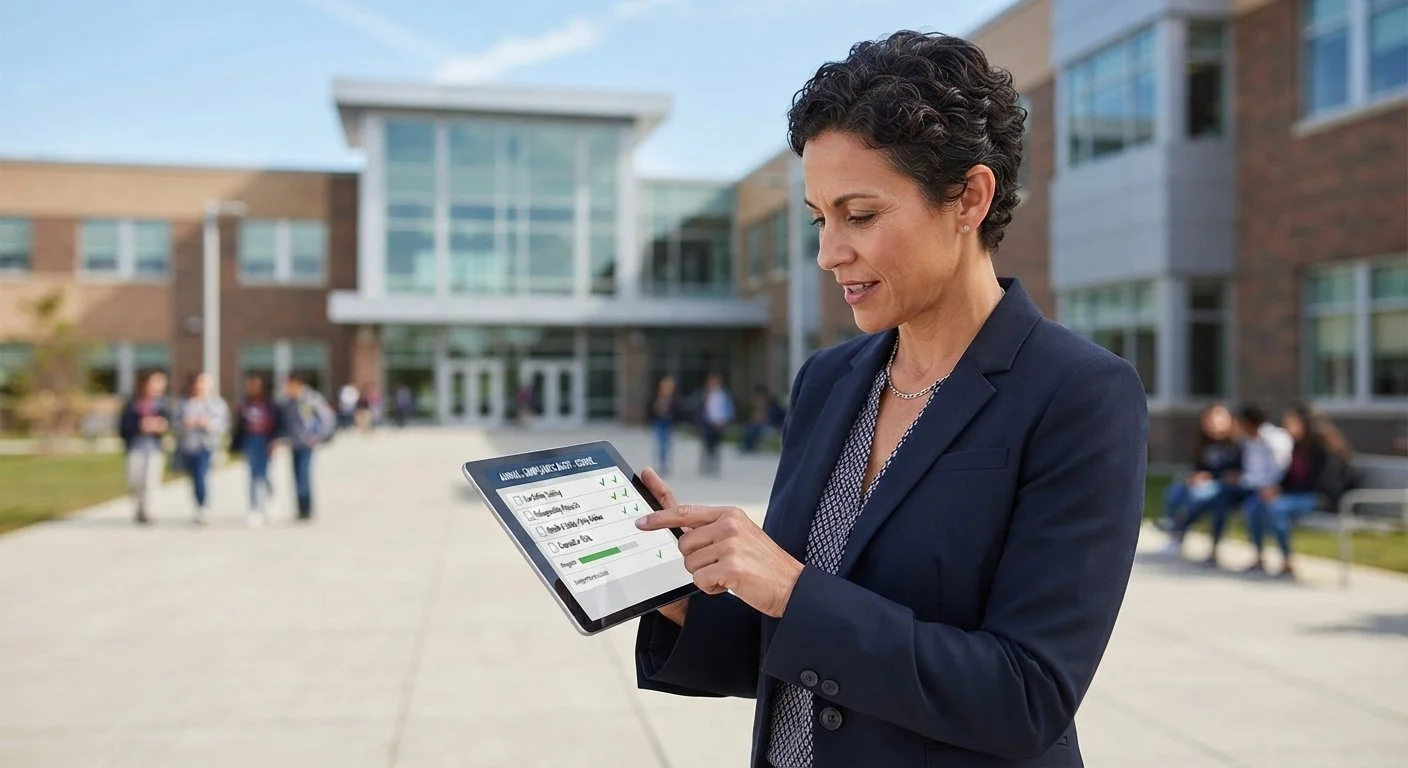
If you’ve recently looked at the Department for Education’s (DfE) comprehensive suite of school security guidance, you might have felt a sudden urge to make a quick cup of tea and stare blankly out the window. Between self-assessment emergency checklists, bomb threat logs, business continuity plans, and counter-terrorism guides, it is easy to view the package as a bureaucratic maze.
Crucially, this entire toolkit is intrinsically linked to the Terrorism (Protection of Premises) Act 2025 (commonly known as Martyn’s Law). With the legislation’s implementation window actively ticking down toward full enforcement, headteachers and trust leaders face a critical window to get their houses in order.
The good news? You do not need to treat every single document as a rigid, standalone compliance trap.
Under the Act, schools generally fall into the standard tier (reflecting capacities of 200+ individuals), meaning the focus is heavily on procedural readiness rather than expensive physical overhauls. The secret to keeping your sanity—and getting compliant over the next 6 months—is scaling and tailoring these materials so they are proportional to your specific setting.
1. Infant Schools: Keeping It Calm, Cozy, and Low-Stress
The Challenge: Meeting rigorous emergency planning standards and Act readiness without terrifying four-to-seven-year-olds or overwhelming a compact staff team.
What You Need to Do:
Adapt the Lockdown & Shelter Templates: Strip out aggressive alarm tones and complex barricade drills. Focus instead on gentle, coded staff communication and low-key classroom management—such as gathering children on the reading carpet away from low-level windows to read a story quietly.
Streamline Business Continuity: Focus your plan heavily on communication trees for parents, severe weather/heating failure closures, and safe reunification protocols.
Who’s Responsible: Headteachers and site leads complete the core safety audit, while class teachers simply rely on clear, single-page visual flowcharts displayed discreetly in classrooms.
2. Primary Schools: Balancing Open Community Use with Everyday Readiness
The Challenge: Managing bustling two-form entry sites, multiple pedestrian gates, and busy breakfast or after-school clubs while preparing for standard-tier compliance.
What You Need to Do:
Audit Physical Access: Use the DfE’s Self-Assessment Emergency Incident Planning Checklist to review visitor bottlenecks during peak drop-off and pick-up times, automated gate controls, and sign-in procedures.
Establish Threat Protocols: Keep the DfE’s Bomb Alert and Threat Template right next to the main reception desk alongside a structured call-handling checklist so front-desk staff know exactly what questions to ask if an anonymous call comes in.
Who’s Responsible: Operational tasks are shared between the Senior Leadership Team (SLT), Designated Safeguarding Leads (DSLs), and site managers, backed by termly table-top reviews.
3. Senior Schools & Multi-Academy Trusts: Robust Compliance & Legislative Readiness
The Challenge: Overseeing large campuses, thousands of teenage movements, open visitor policies, community lettings, and preparing documentation ahead of upcoming statutory enforcement.
What You Need to Do:
Deploy Formal Threat Assessments: Fully utilize the DfE’s counter-terrorism and security templates to map physical vulnerabilities, crowded congregation points (like assembly halls and cafeterias), and clear staff roles (such as designated incident coordinators).
Rigorous Debriefing: Systematically use the DfE’s Post-Incident Support Checklist and review tools following any live drill or security scare to update Personal Emergency Evacuation Plans (PEEPS) and refine response times.
Who’s Responsible: Estates Directors, Health & Safety Officers, and Trust Executive Boards, supported by robust staff training and live rehearsals managed sensitively to prevent anxiety.
Your Next Step
Take a breath, put the kettle back on, and remember that safety planning is an evolution, not an overnight exam. You can explore the full collection of tools, templates, and guidance directly on the government portal:
🔗 Access the official DfE School and College Security Guidance and Checklists (hyperlinked to your DfE source URL)
Use the next 6 months to run your current arrangements through their self-assessment checklist, tick off what you already do well under your standard safeguarding duties, and scale the rest to fit your children, your staff, and your community.